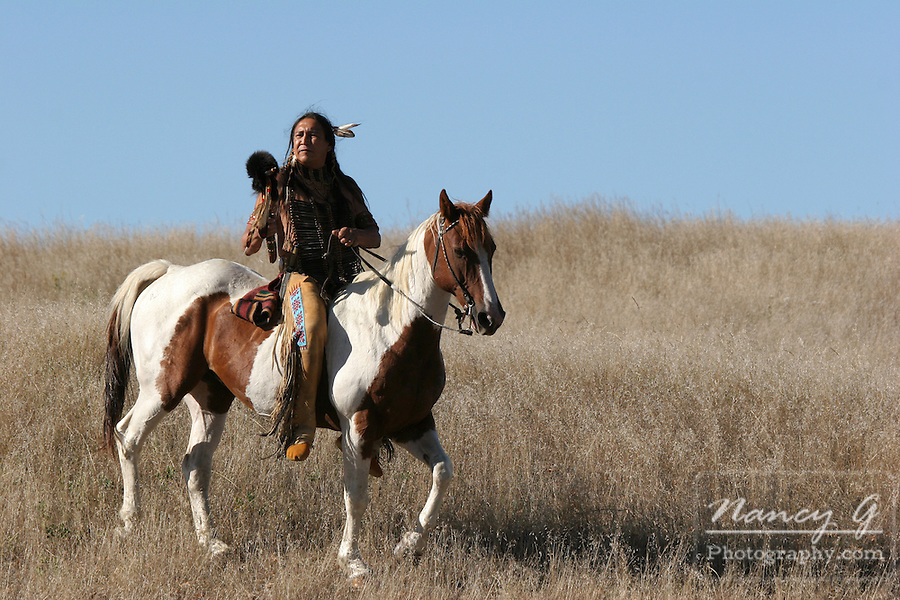
A woman from New York was driving through a remote part of Arizona when hercar broke down. An American Indian on horseback came along and offered her aride to a nearby town. She climbed up behind him on the horse and they rodeoff.
The ride was uneventful, except that every few minutes the Indian would letout a 'Ye-e-e-e-h-a-a-a-a' so loud that it echoed from the surroundinghills.
When they arrived in town, he let her off at the local service station,yelled one final 'Ye-e-e-e-h-a-a-a-a!' and rode off.
'What did you do to get that Indian so excited?' asked the service-stationattendant.
'Nothing,' the woman answered. 'I merely sat behind him on thehorse, put my arms around his waist, and held onto the saddle horn so Iwouldn't fall off.'
'Lady,' the attendant said, 'Indians don't use saddles.
#joke
Read more on page http://www.jokesoftheday.net
* This article was originally published here Subscribe for more JOKES
The ride was uneventful, except that every few minutes the Indian would letout a 'Ye-e-e-e-h-a-a-a-a' so loud that it echoed from the surroundinghills.
When they arrived in town, he let her off at the local service station,yelled one final 'Ye-e-e-e-h-a-a-a-a!' and rode off.
'What did you do to get that Indian so excited?' asked the service-stationattendant.
'Nothing,' the woman answered. 'I merely sat behind him on thehorse, put my arms around his waist, and held onto the saddle horn so Iwouldn't fall off.'
'Lady,' the attendant said, 'Indians don't use saddles.
#joke
Read more on page http://www.jokesoftheday.net
* This article was originally published here Subscribe for more JOKES
Comments
Post a Comment